A Sneak Peek into Maple Season

Submitted by guest blogger Zohar Gitlis

At the time of this writing I’m curled up in front of my wood stove, drinking tea and watching the frost send tendrils up my windows. The days are getting longer but winter’s hold is still tight. Sugaring, or maple syrup-ing, marks the first whisper of an approaching spring every year — the sweetness isn’t just a metaphor for the anticipated change of season — it’s the literal energy force of our waking forests. When maple trees sense rising temperatures they send sap, or stored carbohydrates, from their roots upwards to the tree canopy — this is what maple farmers mean when they say the “sap is running.” That sap provides the nutrition necessary for the tree to develop new buds; buds become leaves; leaves spend the long summer days capturing and photosynthesizing energy from the sun; that energy is then converted to sap and stored in roots for the winter and the next budding cycle. 

Maple Knoll Farm, in Minerva, is a small family-operated sugar bush nestled behind the Moxham Mountain ridge, and just a short drive from North Creek and Gore Mountain ski area. Eric Klippel bought the farm in 2005 and made his first syrup there in 2008. For Klippel, sugaring is a labor of love; the trees are tapped, firewood cut, and sap boiled by his friends and family every year. The folks that work Maple Knoll Farm with Klippel do it for a love of the process, the forest, and usually a small share of syrup for their home kitchens.

Klippel grew up in North Creek and made his first maple syrup when he was in 7th grade. He remembers tapping a couple of trees in his cousin’s backyard and boiling the sap on a flat pan over a fire of slab lumber. He started sugaring in earnest in 1984 and ran a sugar house in North Creek for about 14 years before purchasing Maple Knoll Farm. 

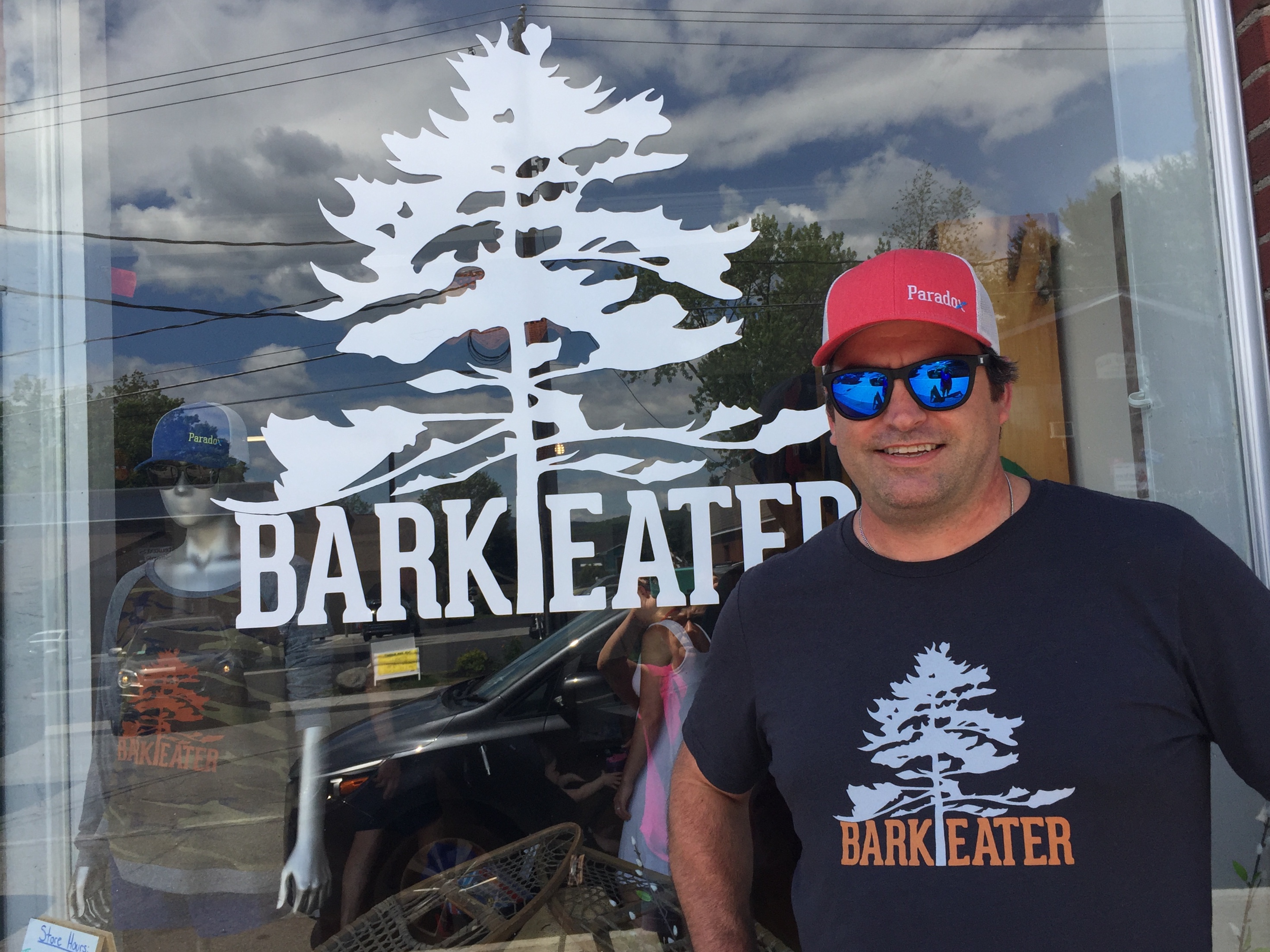
Klippel in front of the Maple Knoll Sugar House.

Behind the scenes

Klippel’s days vary a lot during the year, but he typically starts tapping trees in early February with friends and neighbors. The vacuum lines are already hung from the 1,600 maples that he taps, but new holes are drilled and the polycarbonate spouts are replaced. Once the new spouts are in, Klippel will let the trees run on their own for a bit; waiting to turn on the vacuum assist until the weather cooperates to provide a steady stream of warm days and cold nights. 


View of blue vacuum lines against Moxam Mountain Ridge.

Once enough sap is harvested, Maple Knoll will fire up their sugar house. The sugar house is a majestic dark wood barn designed by Klippel with large glass windows intended to invoke Great Camp Santanoni in neighboring Newcomb. Klippel built the barn entirely with wood harvested from Maple Knoll Farm. The sugar house is home to a number of holding tanks for maple sap, a reverse osmosis machine (used to remove water from freshly harvested sap), an evaporator, finishing pan, and a commercial kitchen with equipment for making value-added products like maple cream. 

View of the sugar house against Maple Knoll’s sugar bush. 
The evaporator is the heart of the sugar house; Klippel’s is a 3-foot by 10-foot wood-fired vortex evaporator. After sap is run through the reverse osmosis machine, bringing it from 2% sugar closer to 10%, it goes to the evaporator pan. While running, the evaporator gets stoked with firewood about every 8 minutes; the high heat of the wood fire keeps the sap boiling to evaporate off the excess water. At finish the sugar density of the syrup will be closer to 67% (67% = that sticky amber gold that’s perfect for pancakes, oats, and sneaking by the spoonful). 

Evaporator

Although a sugar house, warm from the evaporator’s fire, air hung with sweetness and excitement, is always fun, Klippel prefers getting out into the woods. His favorite part of farming maple is developing the sugar bush itself. He enjoys finding a sturdy young maple with the potential to become a strong producer and releasing it. Releasing is the process of cutting out competing trees to give the maple room to develop a larger crown, increasing foliation and photosynthesis, both of which are important in a maple crop. The year-round work of caring for the maples, harvesting firewood, and maintaining a healthy sugar bush contributes to a bountiful sugaring season.

Keeping tradition alive

Most of all, Klippel loves the tradition of maple sugaring. “It used to be that pretty much every farmer here made syrup, they wanted sugar, they made syrup,” he says. Maple Knoll’s logo, “An Adirondack Tradition,” emphasizes his focus on keeping that tradition alive. Klippel isn’t in the sugaring business for big profits, saying “I really enjoy the tradition of it, the education of it. It is a tradition that I hope the people of the Adirondacks can sustain as a part of our heritage and our history.”

Visiting

On my way out the door Klippel asks if I’ll do anything else while in town. I tell him I would like to stop by Cafe Sarah in North Creek, a favorite in the area for fresh baked goods, hearty soups, and a warm cup of coffee. He responds, “Say hello to Sarah for me, and look out for my maple syrup, we have a retail display there.”

Maple Knoll Syrup for sale at Cafe Sarah, in North Creek, NY.

Maple Weekends this year are March 21-22, and 28-29. Klippel and his family will have cookies, homemade doughnuts, and maple products to sample at their sugar house in Minerva. If you’re lucky and the weather cooperates you might even get to see the evaporator in action. While you’re in the area check out Cafe Sarah in North Creek, or hike the Moxham Mountain Ridge Trail (the trailhead is just a mile further down 14th Road from Maple Knoll Farm).


Glacial Litter or Unforeseen Beauty

Jim and I were in search of an abandoned road, a deep valley, and a summit — not necessarily in that order. This was sure to be an adventure. It was the first week of September and strangely the weather resembled that of a typical July day, thick in humidity and boasting a rising heat index. There was hardly a cloud in the sky to offer us a reprieve from the rays of the sun, but fortunately we got an early start and the canopy of the maple and beech trees shaded us.

I had received a bit of beta from a friend in regards to Bailey Hill, the summit we were in search of. It supposedly had a large glacial erratic on the summit, which was essentially the highest point, and we would need to somehow scale it — but just how big was it, or was it just another “big fish” story? I had a notion to bring a length of rope to help aid our final ascent onto the boulder, but through a rush to get rolling in the morning I failed to act on it.

We arrived at the Loch Muller Trailhead for Hoffman Notch and Bailey Pond ready to hit the trail. We used the trail toward Bailey Pond which according to my USGS map is considered to be a continuation of Loch Muller Road. This old road, now well forgotten and abandoned, went through the valley east of Bailey Hill and ended near the base of a small bump on Washburn Ridge. Washburn Ridge is a rather large expanse of land spreading from Loch Muller to Blue Ridge, a land mass of curiosity for me.

The trail to Bailey Pond moved by swiftly before us and of course we had to walk the extra couple-hundred feet to the shore to take a gander at it. The dry weather has definitely taken its toll on the pond, but its beauty still remained; Hayes Mountain reflected in the placid water like a sentinel to the area, watching guard, protecting its smaller brethren.

Loch Muller Road continued beyond the trail to Bailey Pond — we would use this as long as we could to gain the ridge on the south side of Bailey Hill. To clarify, this 'hill' is noted as 3050-feet — perhaps hill isn't quite an accurate term. The road remained well-used along the old trail toward Marion Pond, but as soon at swung left out of the valley, it pretty much disappeared into the forest, as did we. From this point we started our bushwhack toward the boulder-topped summit. The forest was open with hardwoods, beech nuts littered the ground, black bears would surely soon follow. High in fat, the beech nuts are a main source for these bruins to get ready for their winter hiatus.

Once on the ridge the contour lines spread out and offered us a relaxing hike. Dotted with fern glades, small rocky outcroppings, and only a scattering of conifers we enjoyed nearly every step of the adventure. The ridge unfolded in front of us and we quickly neared the top. The highest point of land was just prior to the erratic, but the “pet rock” was obviously much higher.

The scramble to the top was an interesting proposition, one worthy of a short video, but lucky for us no one was watching. The boulder stood 12-feet in height and was massive in girth. It was well-rounded, and even if there were foot-holds and hand-jams we would have been battling the slippery and loose moss it was layered in. We decided it would be in our best interest to not climb it — but that wasn’t going to happen. We went in search of a couple of dead trees to prop up against a live one to use an impromptu ladder. We found two, both of which were, what I would call, “a piss-poor idea.” These two were rotten and not all that stable; I went in search of a third tree. Then I heard: “That wasn’t too bad,” as Jimbo managed to climb his small stature to the top using the other two. Weighing a good 75-pounds more than him, it would be questionable for me to use the same route. What the heck, I would give it a go. At about 5-feet off the ground I was able to reach up and grab a small pole-sized yellow birch and I pulled myself to victory. But now, how the heck would we get down?

Luckily, gravity did all the work getting us down. All we had to do was point our toes in the right direction and land flat and sound. Bracing our backs against the boulder we slid and landed on the soft spruce needle and moss-layered ground, with a small thump we were there.

Located to the east of us was Bailey Pond Inlet and a small high mountain beaver pond, at least that’s what the map and our GPS showed. We were not all that confident that it still existed in the sense that water would still be left in the bowl. Would it be more in line with a grassy field tucked into a deep valley between us on Bailey Hill and the lower flanks of Washburn Ridge? Of course, we must go, because a close second to a mountain’s summit is a valley’s wetland.

Nature is full of genius and the fact that this secluded peak was so welcoming and the others around it are so violent, just solidified this belief. Our descent into the valley was steep, but broken up with land shelves allowing us a gentle conclusion to the mountain. A short distance from the summit we stood on the shore of the hidden wetland, looking out over a grassy layer with a marshy bottom. Too marshy for us to wander out further than 20’ or so in search of the perfect picture and soggy feet.

It was unfortunate that we couldn’t use the grassy field as an escape down through the valley; we would have to climb slightly back into the hardwoods and out of the conifer -lined shore to make any decent time at all. The undulating hills gained us much more unforeseen elevation and the chin hobble added a bit of frustration. We soon came upon an old beaver dam, one which must have blown out with age and drained the once gleaming pond that existed here. Downstream of the beaver dam was more grass and another dam, but the bottom was dry and offered an easy stroll further downstream where the wetland receded and the inlet’s rocky bottom reared its trail-like face.

This was also roughly the area where the Loch Muller Road made a hard turn up Washburn Ridge and the spot we hoped to find it; however it was, like all roads and trails whose use goes unwarranted, returned to nature. We turned to Bailey Pond Inlet and the rocky trail it provided us as a clear route back to the trailhead, and we rock-hopped our way downstream. We made excellent time, slipping now and again on the moisture coated rocks, but we were soon at the crossing of Loch Muller Road — at least where it was supposed to be, but no remnants made themselves apparent. We made for the woods once again and another crossing of the old road, this time a dried-up streambed, and here was a cable, a support for a bridge perhaps? Also a few old cans, beer of course, and a soup can — maybe this was from a camp along the old roadway? Then, just feet away, we were back on the portion of the old road we followed in, easy to define and fast to hike.

At the end of the day, over a cold beer at the trailhead, we appreciated our adventure as we do with all our outings. We were happy to have found what we were looking for, more than just solitude and history, we discovered a bit of glacial litter as well.

Make the Schroon Lake Region your Adirondack basecamp for your next hiking adventure. Here you'll find great places to fill your stomach and rest your head after a memorable day of outdoor adventures.


This week the ADKs rock on:

Hamilton rocks

The day I quit rock climbing

6 degrees to Kid Rock

Some rockin’ pieces

Boulder dash

Heart of stone

Rum of ages

Best Ways to Enjoy Fall in the Southern Adirondacks

Ten Ways to Experience Fall in the Southern Adirondacks

The Southern Adirondacks in the fall is a destination that bursts with vibrant colors, crisp air, and endless outdoor adventures. As the leaves turn into a tapestry of reds, oranges, and yellows, the region offers a perfect blend of activities for nature lovers, adventure seekers, and those looking to soak in the serene beauty of autumn. Let’s explore the top 10 best things to see and do this fall in the Adirondack Hub!

1. Explore Great Camp Santanoni

Visit the historic Great Camp Santanoni via a scenic 5-mile hike or bike ride. Surrounded by vibrant fall foliage, the camp offers stunning views and a glimpse into the Gilded Age wilderness retreats. Great Camp Santanoni is also accessible via horse drawn wagon and, new this year, the Department of Environmental Conservation (DEC) is offering individuals with disabilities to reserve and use a power wheelchair device free of charge. 

Woman walking into gatehouse

2. Apple and pumpkin picking at It's About Thyme Farm in Minerva

Enjoy apple and pumpkin picking at It's About Thyme Farm in Minerva. Set against colorful fall scenery, the farm also offers fresh produce and homemade goods, perfect for celebrating the season.

Its about thyme farm front view with sign

3. Explore the Upper Works

Discover the history and beauty of the Upper Works, a former mining village, now a gateway to the High Peaks. Hike through fall foliage to remote lakes and explore the ruins of the old ironworks with interpretive panels set along the gravel road where you have the opportunity to learn more about the history.

Looking out at interpretive panels and blast furnace in the Upper Works

4. Enjoy a fall boat ride around Schroon Lake

Take a peaceful boat ride on Schroon Lake, where the calm waters reflect the stunning autumn colors. Whether you choose to paddle or ride, it’s a serene way to enjoy the fall landscape.

Fall view from the Lodge at Schroon Lake

5. Hike Mount Severance

Hike the 2-mile trail to Mount Severance for panoramic views of the Adirondack peaks and Schroon Lake. This beginner friendly trail is perfect for fall, offering beautiful foliage and rewarding vistas.

View from mt. Severance

6. Fall shopping along Main St. in Schroon Lake

Stroll along Main Street in Schroon Lake for unique shops and boutiques. Fall brings cozy atmospheres and seasonal items, including local crafts, autumn decor, and warm clothing. Be sure to check out the new Schroon Lake Department Store!

Aerial View of Main St Schroon Lake

7. Enjoy some of the best fall events

Experience the Southern Adirondacks’ through fall events like Teddy Roosevelt Weekend, Handlebarley, and Adirondack Marathon Distance Festival, all set against the vibrant fall backdrop.

Two people biking around the Adirondacks

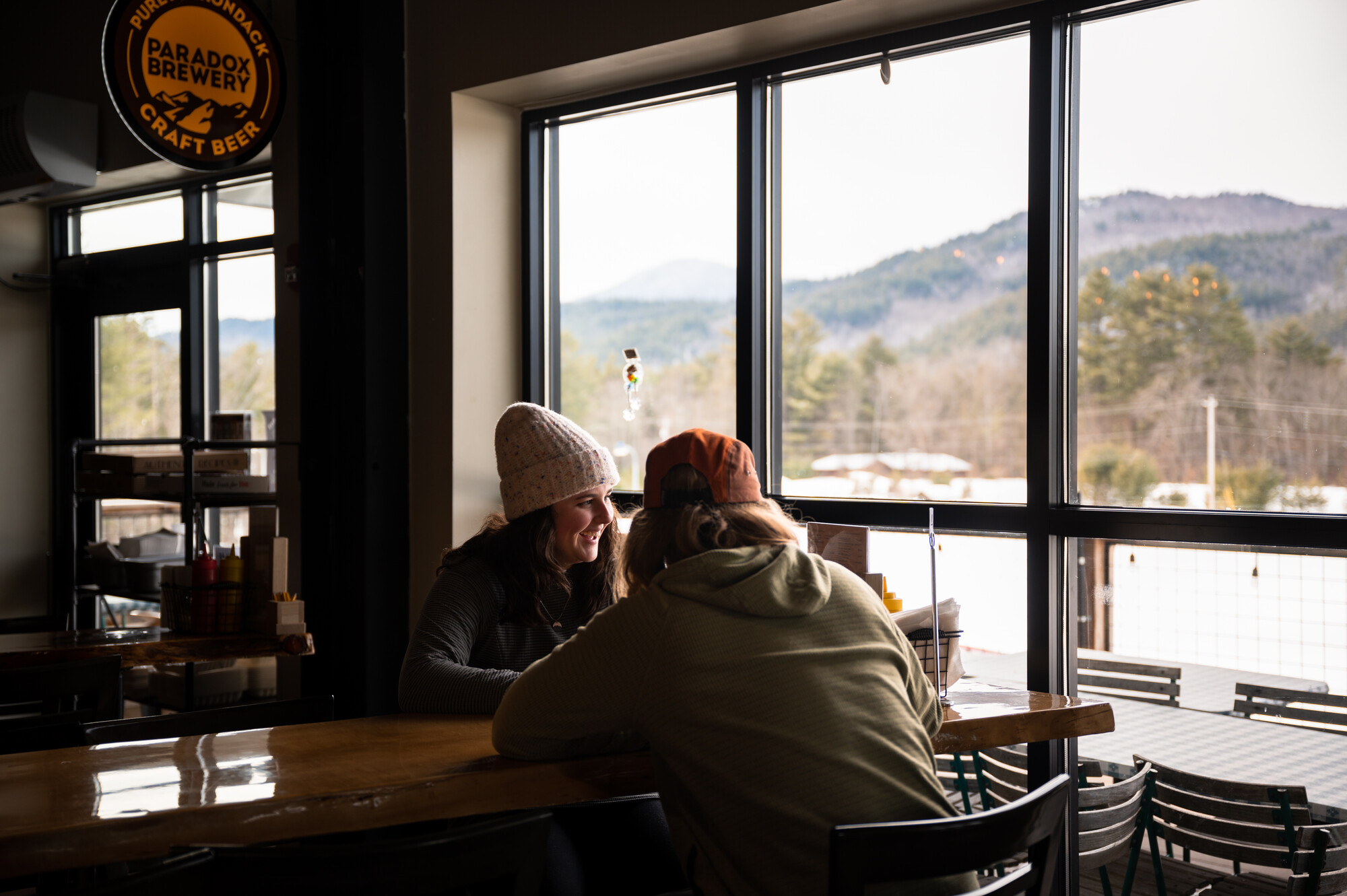
8. Sip on delicious fall brews while taking in the views at Paradox Brewery

Head to Paradox Brewery in North Hudson to enjoy seasonal brews that taste like fall, while taking in the stunning fall views from their outdoor patio.

Two people clicking pints together at Paradox Brewery

9. Fall camping adventure

Embrace the cooler temperatures and fewer crowds with a fall camping trip. Popular spots like Pharaoh Lake offer serene landscapes, warm campfires, and starry skies. Or stay at any one of the scenic campgrounds. Be sure to stop into Frontier Town Gateway on your way through to stock up on all your camping essentials. 

Woman looking out at the water

10. There’s more to explore in the Upper Hudson Recreation Hub

Explore more of the Adirondacks! The Upper Hudson Recreation Hub offers fall adventures from hiking and paddling to wildlife watching. Enjoy the autumn beauty with fewer visitors in this outdoor haven.

Picture of the Sign for Blue Mountain Lake

Whether you decide to experience just one activity from our list or all ten, you won’t want to miss the chance to create unforgettable memories during the best fall adventure right here in the Adirondack Hub!

A 3 Hour Tour...

… on an 8+ Mile Lake

It’s a gorgeous late summer morning as we head out of the High Peaks toward the beautiful lower Adirondack tracts, specifically to Schroon Lake. One of my favorite spots to swim, I have never actually been out on Schroon by boat. I’m excited.

This is an exploration expedition I am taking with my co-workers Kelly and Shaun. We live only an hour from Schroon Lake, but know very little about the actual body of water - we are going to change that. Kelly is generously driving her boat and I am traveling with her. We are meeting Shaun in town as he headed down a bit earlier to document a few of the stores.

Munchies and Magic

Since we were heading down from the north, we took Exit 28 - which put us in a perfect spot to pick up our picnic lunch at the Mount Severance Country Store (now closed, but try out the Adirondack General Store in Schroon Lake). Located on the outskirts of town (probably a mile or so from the main retail stretch), this has always been one of my favorite stops. Somehow on long trips I always find an excuse to take a break right around this point - I am 100% sure it has everything to do with the many choices of homemade baked goods they offer; from muffins and donuts to cookies, bars, and what I like to call 'magic bread' - so nicknamed as I have no idea how they get this delicious bread to be so light and fluffy, but I will buy a loaf every single time. Every time.

Walking in we are cheerfully greeted by a few locals that are standing around chatting over their morning snack. We looked over the generous sandwich menu and ordered a couple of wraps for ourselves and a sub for Shaun. As our food was being assembled, we took a couple of minutes to peruse the fun and odd (candied crickets!?) offerings at this all-purpose camp store; it’s almost a bit overwhelming to be able to buy your fishing gear, next to your cereal, water guns, magazines, and propane. We grabbed a few cookies, a couple of bags of chips, and - yes, a loaf of magic. I then got into a bit of a debate with the gentleman behind the counter: he likes his bread crusty and a bit harder; after I took my turn extolling the virtues of the loaf in question - he finally conceded, this bread (that I love!) would be okay with spaghetti and sauce. By now, our order was ready and we had to laugh when the sub was handed over - it could’ve fed all 3 of us, well worth the price (around $7 if I remember correctly). Our picnic basket was ready, the temperature outside was climbing, the water was calling.

Boats, Beaches, Bays, Boards

Heading into town, we took note of the Marina down a long driveway on our left, and then headed down to the Town Boat Launch, conveniently located adjacent to the public beach, just a block from town. By the time we got the boat in the water and Kelly had toyed with the motor a bit, Shaun joined us, and we were ready to explore - well, explore our picnic anyway - it was after 1pm by now. We headed out past the beach and decided that was a good place to drift and eat while we formalized our plan of action. A couple of cocky seagulls thought this was a good idea as well, and hovered nearby doing lazy circles as they awaited any scraps that might not make it into our mouths - they were sadly disappointed.

Sunblock applied, stomachs filled, a sort-of plan in hand; we headed north toward the Marina. Finding it was quite a bit easier by land than by sea - or by lake - as the case may be. We followed a set of buoys into a smaller bay at the end of the lake, and then just as we were starting to wonder if we missed it, a channel opened up to our left and we came across the full-service Schroon Lake Marina. The place was hopping - obviously, summer on the lake is a big draw in Schroon. We stopped for a moment to take a few photos, then decided it was time to actually head back out and test the water.

Leaving the channel, we noted what was obviously a local’s hot spot - on the far side of the bay, next to the entrance of the river, a beach only accessible by boat. Families, dogs, guys playing football, teens exploring - this is what we came in search of! Kelly and I took the opportunity to dive in and cool off. The water was awesome, still spring-fed, but warmer than our high-peak mountain lakes. We spent a few minutes chatting with folks and found out that the Marina is actually the only one on the lake - good fact to know.

Now, I am not a water-skier or wakeboarder (I’m not even cool enough to know if those are the hip terms… yes, I said, hip) but my companions were itching to strap on their gear, so off we went to search for an open stretch of calm water.

Schroon Lake is beautiful. I mean, beautiful. Plenty of open water, surrounded by picturesque landscape, mountains peacefully looming in the distance. We are passing boats of all sizes & makes - from sailboats to party barges, and everyone is smiling - really, how could you not be? I can not wait to take a tour in later September or October - the foliage must be absolutely outstanding from this vantage point.

Okay, so, we find the perfect spot and Kelly is first up on her board. Shaun is driving the boat, I’m spotting; and, this is new, I’m given a very quick lesson on how to use one of Shaun’s cameras with the instructions to try to get a few shots. Now, I’m nervous. We are on a boat, with waves, I’m holding a camera that is infinitely more expensive than anything I own, and… I’m clumsy. I do not point this out - I just hold on for dear life and hope for the best.

Kelly takes an awesome ride, and it’s time for Shaun to strap on his ski. We head down the lake to find another calm bay, with 8 miles of water at our disposal, there are plenty of choices and we can afford to be picky. I am still on camera duty - I have still not dropped anything. The sun is shining. This is a good day.

After a couple more rides each, we are at the far end of the lake - literally, within site of the end. About as far away from our starting point as possible. It’s almost 3pm now, time for us all to jump back in for a last swim and then head back to the dock. Our plan is to be back on the road between 3:30-3:45, as I have to pick up my son at 5pm, and we have to factor in an hour drive. Ambitious, true - but totally doable.

Our Intentions Were Good… Our Boat - Not So Much

3pm… Hmm. The boat won’t start.

3:10… Hmm. The boat still won’t start.

3:15… Hmm. I am getting nervous.

3:18… Shoot (that’s the polite way of putting it)

3:20… Placing calls to people we know that may be in the area and available to save us.

3:25… Is that a dock? A Public Campground? Yes, it is… and it looks pretty nice. We should camp here sometime. Can we swim to it? Tow the boat? I have a couple of broken ribs, but I can probably do the side-stroke - it can’t be more than a quarter-mile or so. Google it. Call it.

3:30… Yup, it’s Eagle Point Campground. Sadly, they do not have a dock that’s accessible for a ski boat, and they don’t recommend pulling it into shore - lots of jagged submerged rocks.

3:35… Hmm… Still won’t start. We need to be saved. Let’s call the Marina.
* Note to all: This is amazing - we all had great reception on our phones. A strong signal in the middle of a lake in the Adirondacks. Awesome and lucky.

We can not say enough about the Schroon Lake Marina. We called, gave our location - which was greeted cheerfully with something to the effect of, 'wow, chose the absolute furthest point to break down, huh? We’ll head out soon, but it’ll take a few to get to you.' (me: cursing and shaking my fist at the sky! why, oh why, did I not set up a child-care backup? why, on this beautiful day when I normally would be ecstatic to be stranded on a lake, do I actually have a deadline? why did I leave the magic bread in the car??)

3:35-4ish… Drink all available liquid. Eat cookies, chips, and leftover sandwiches. Call and arrange for childcare. Accept the situation and the forced relaxation. Wait patiently. Apply more sunscreen. Wave at passerby. Stare at the beautiful sailboat floating peacefully under the blue sky. Relax. Enjoy the fact that we are stuck in one of the most idyllic situations possible.

4:00-4:10… Rob from Schroon Lake Marina arrives with gas, jumpers, a big smile, and a willingness to shoot the breeze and answer all our random questions about town; while he worked out the problem. We are up and running within minutes, and he graciously followed us back to the dock, mile after mile - we wanted to see this lake, and I can honestly say, mission accomplished.

4:40ish… We loaded the boat, parted ways with Shaun, and then decided to take a spin (via car) down to the Marina. What an awesome place. Definitely worth a stop if you are in the area and looking for any gear. They have recently refinished the main building, and they sell everything from boats and gear to t-shirts and mugs. Plus… as seems to be the case in most places I’ve visited in Schroon, you’ll be greeted at a family-owned business by friendly outgoing folks.

5:00ish… We decide our adventure is over, and we really should get on the road. Only an hour or so later than we planned. Could have been worse by all means.

It is almost, almost, a blessing that we broke down - it afforded us extra time to take in our surroundings, research the town, and mingle with the locals. Foliage Season is about to hit, and Schroon Lake deserves another visit: while it might be getting a bit chilly to dive in, I hear we need to take a hike up Mt. Severance, and there are a few restaurants I can’t wait to try out - I’m open to suggestions, send me your favorite spots, maybe we’ll get a chance to swing by! Next time, we’ll plan for a full day (and daycare) - that much I guarantee.

Path To Self Renewal

Submitted by Guest Blogger: Troy Thomas


After a blend of hazelnut/chocolate coffee and a hearty, thoughtfully prepared, ham and cheese omelette breakfast, I set out early for my outing. Not five minutes into my journey, poised on the side of the road is a doe, regal in its timid stance, waiting to cross the road.

I am grateful she saw me and I her. I remind myself that deer move from dusk until dawn, and this silvery blue autumn cloud cover has stretched the dawn hours on this crisp morning.

So now, with a heightened sense of things that only nature can provide, I conclude that in the Adirondacks you are constantly reminded that what you see is not a statue or a billboard — it is real, it has breath, and this is its home.

Back to nature

My alertness, fed by coffee and in no small part the suddenness of the deer sighting, I safely pull over onto a provided lookout. Everywhere I glance is a painting.

I capture a frosted tree, its branches bending to a wind that is not there, as if frozen in a more tumultuous time.

There’s a picturesque drive from any direction as I travel through time. My destination, the Adirondack Interpretive Center in Newcomb, was once part of New France.

Like all border towns, a mystery, on the edge of some map, but it’s that edge that keeps these places alive, the cliche trading post scene in westerns or adventure films to gather up supplies and obtain tips and knowledge of the local dialect and terrain for the trek ahead.

A historical intrigue is piqued in my imagination, but for now the sun breaks through, evergreen reflections dazzle and silver frosted reeds burn into a gold mist.

Choice of trails

The Adirondack Interpretive Center (AIC) is located at 5922 Route 28N in Newcomb, New York. There is ample paved parking. The trails at the AIC welcome dogs, but here in particular a sign asks that you leash your four-legged friends to protect nature’s other animals, like the beaver and geese. A laminated note at the trailhead I chose tells me that beaver have built a dam under the bridge, and the east end has flooded and is now impassable without proper footwear.

After looking down at my shoes, the original plan is ditched. I sign in and turn around to set my sights on Rich Lake and the other Peninsula Trails, its moss covered entrance only a few steps away. I decide on the Rich Lake Trail, so I follow the red markers. Each trail has its own color coded markers to follow.

It’s time to stretch your legs whether you have two or four. The trail descends into a rich-smelling wood, and upon crossing a bridge I catch myself smiling for no apparent reason. I’m a child again, enjoying abundant rock, fallen trees, and lacy hemlock.

Is it any wonder that a cooped-up dog leaps onto all fours at the word "walk." It just feels good, it’s fun. How many times as a child did I hear from a parent, “Get outside and play.” Now looking back, it's not bad advice.

The Rich Lake Trail is only a mere 0.6 mile warm-up trek, but with payoffs around every corner as time slows. I gaze onto Rich Lake, with Goodnow Mountain in the distance.

Clubmoss, hollyhock, goldthread, partridge berries, and hemlock present nature’s deconstructed Christmas tree. The frost creates a holiday mood.

Partridge berries.
My lungs take in and exchange the fresh, clean air that feels measured out and dialed in specifically for me. I find myself actually taking time to breathe, a natural instinct I catch myself forgetting to do at the gym or indoor home workout. I spend a lot of time in my life sitting, but here my gait corrects and quickens, and my endorphins surge into noticeable positivity as I move on through my sun-speckled path.

Hemlock held in nature’s A-frame.

I try not to deprive myself of this. I adjust my footwear from hiking sandals in summer, hiking shoe or boot in fall and spring, to snowshoes in winter. I round the path, and what appears to be an ancient monolith or maybe a giant dinosaur tooth towers into view.

Laminated information cards along the way quell my romance with archeology and prehistoric dentistry. That is how I know this rock was placed here by a glacier only 13,000 years ago.

I’m 6-foot-2, you do the math.

Choice of stops

Park benches are along the way to sit and experience the view in slow, deep fashion. Always vibrant greens and blues and their reflections are to be discovered long after the autumn peaks.

Launch into nature, engage your body and mind, set your imagination and your spirit free. Just off the path, stop and explore the banks to see new sights at every turn, like the mirrored clouds seen here, or a fallen birch tree’s glowing white bark in the sunlight just below the surface of the water.

The Rich Lake Trail and Peninsula Trails and all others here are 1 mile and under. This makes it easy to tie them all together for an extended hike, which will warrant that beautifully put together picnic basket I now have in my mind.

I stop and look ahead and see more lake views and plenty of sunlight ahead for this day. Invigorated, I decide rather than make my return trip a backtrack I will continue on and complete the loop instead, thus extending my hike. I pause to soak up some sun and drink my favorite bottled water. I feel different, on a molecular level. My lungs are not the same pair I brought with me, something about this mountain air regenerates me.

I can return to my life, significant other, family, friends, job, hobbies, passions, all with a renewed sense, see everyone in a new light, the light I bring to the table now shines brighter on them as I bring my new light into the totality of all the light in my life. I can look with better eyes now.
I trek on.
Start your rewewal with a lovely stay. Stoke up for another hike with a fine meal. There is so much great hiking.


This week in other ADK related news:

Sit, coast, ride

Grinch be gone

Naughty or nice

Cold-weather options

Old genes

Duck, duck, goose

Schroon Lake: Hard-water Heaven

It's almost inconceivable that Schroon Lake can sometimes fly under the ice fishing radar, shoved off into the corner by the sprawling waters of nearby Lake Champlain and its incredible winter perch fishery, as well as the smelt that annually spark the creation of mini ice hut villages on places like Bulwagga Bay.

But make no mistake, Schroon Lake does, in fact, have a following of its own among hard-water anglers in the know. The reason is simple: the fishing can be fantastic.

I fell in love with the lake more than a decade ago when longtime friend and Adirondack guide John Gereau introduced me to its ice fishing wonders. We pulled three fine lake trout through the ice one January morning, and I was a believer from that day forward. And the lake didn't disappoint, alternately yielding landlocked salmon, perch, smelt, and northern pike in subsequent outings.

I've always been enamored with the 4,000-acre lake's salmonid population (lakers and landlocks). To me, lake trout and landlocked salmon are symbols of pure, cold water and the northwoods. So over the years I've pretty much ignored Schroon's perch possibilities, unless it meant simply grabbing a jigging rod after I'd set a few tip-ups for the lakers and landlocks. The lake – actually the Schroon Lake Fish and Game Club – also hosts a hugely popular ice fishing derby in early March each year, an event that includes a spaghetti dinner and raffles and has become a tradition for scores of hard-water anglers.

What I have learned along the way after fishing Schroon Lake for a few years is, arrive early. And I mean early. Cutting holes in the dark is normal for me, and that first hour after sunrise often seems to be my most productive. If that means staying home at night and getting to bed early, so be it. That's really not a big deal for me, even on traditional times like New Year's Eve when going out and staying out is the norm for many. A few years back, I never made it to midnight, choosing instead to forego Dick Clark's Times Square celebration and get some sleep, the truck packed for an early-morning departure down the road to Schroon, where safe ice awaited.

Paula came along on this outing, when temperatures were fairly comfortable as we trudged across the town beach entry point to a likely looking spot where we could set some tip-ups and enjoy the sunrise. I wondered how many anglers were struggling after a night of ringing in the New Year; I thought maybe I could sell aspirin for $5 a pop.

No wind on this morning, which in my mind was a great way to ring in the New Year. Our tip-ups were set at varying locations and depths. In winter, the lake trout and salmon could be cruising anywhere in the water column. But when our first flag popped shortly after sunrise, I was fully convinced it was a big pike that consumed our live shiner bait in the shallowest of our tip-up sets. It was off and running, threatening to run the entire reel out of its braided line. It was time to set the hook and see what was going on down there.

Steve Piatt holds his Schroon Lake laker

A couple minutes later, and after a dicey cat-and-mouse game at the hole, we flopped onto the ice my biggest Schroon laker ever, topping 9 pounds. Not a bad way to start the New Year. I wondered where it would stand on the leaderboard had I landed it in early March during the derby.

We stuck around for a few hours before deciding to return home to OD on college football bowl games. The big laker – this one I took home for the grill – drew some attention as we hauled our sled off the ice. To me, it was just a reminder of the possibilities Schroon Lake offers every time you walk on its water in winter.

If you're looking to get out on the ice this winter, check out one of the many guides in the region. And when you need to warm up after a long day on the ice, you can visit one of Schroon Lake eateries, where you'll find something for everyone's taste.

A colorful array of events for fall


The Schroon Lake Region events calendar has a few choice late summer events filling out the remainder of the season. On a weekly basis, some summertime favorites include arts, dancing and music.

DROP IN ON SOME ACOUSTICS

On Monday nights, stop on by the Boathouse Theater for some great acoustic music at the Monday Night Acoustic Music Jam. Many of our local favorites on the music scene gather at this weekly jam session to share their talents with each other - as well as the public. New folks are always welcome, so if you’re visiting and have some talent, don't be shy - join in! Or just come by and listen. Bring your chairs and a picnic. The Boat House is on Dock Street and the sessions begin at 7 pm every Monday through October 5th.
TAKE HOME SOME REAL ADIRONDACK ART

On Thursday, September 3rd, don’t miss the last of the Adirondack Artists & Crafters shows in downtown Schroon Lake. They’ve filled the parking lot at the Town Hall each week over the summer with some of our region's finest artists and crafters. Don’t miss this last chance to pick up a truly unique piece of Adirondack craft to bring home!
CELEBRATE THE ROUGHEST RIDER, TEDDY ROOSEVELT

On Labor Day weekend get your history hats on and join in the fun for Newcomb’s annual Teddy Roosevelt Days. Newcomb holds the distinction of being the area in which Vice President Teddy Roosevelt learned the grim news that President McKinley had been shot and was dying. During his arduous trip out of the wilderness, Roosevelt became President of the United States when McKinley died on September 14, 1901, after having been shot by an assassin in Buffalo, New York, on September 6th.

A big list of events are on the schedule for this much-anticipated 3-day annual event on September 11 - 13, 2015, including music, reenactments, fireworks, food, outdoor demonstrations and much more.

OUTBOARD MOTORHEADS, TAKE NOTE!

If you’re one of those old outboard motor buffs, don’t miss the Antique Outboard Motor Swap Meet in Schroon Lake on Sunday, September 13th. There will be experts in all areas of this very cool hobby of collecting antique motors. There’s no charge for admission nor to display or sell. The event takes place beginning at 9 a.m. at the Town Boat Launch in Schroon Lake.

MARATHONERS THIS IS FOR YOU

As the fall leaves reach peak color, Schroon Lake welcomes the many participants in the Adirondack Marathon Distance Festival on September 26th and 27th. This long-standing fall tradition brings thousands of marathon runners to the region. Participants run on one of the most beautiful marathon courses in the Northeast on Sunday, September 27th. Not quite ready to hit the course? Come and cheer on the runners and get inspired.

The Marathon Distance Festival includes a full day of shorter 5K, 10K and Kids Fun Runs on Saturday. With lots of charity options for the entire weekend, you can race and do good at the same time.

For spectators at all our events there is lots to do in Schroon Lake, especially during peak fall foliage. Take advantage of a local hike and make sure to patronize some of our favorite restaurants, shops, taverns and our awesome brewery!


Louisa May Alcott’s classic comes to life at Seagle Music Colony in Schroon Lake

Little Women at SeagleThis beautiful Wednesday evening has me headed south to the town of Schroon Lake and the Seagle Music Colony—easy to get to but tucked away in the woods. Tonight is opening night for "Little Women."

I have been to this venue once several years ago for the company's production of "Crazy for You" but the Seagle Music Colony is celebrating its 97th season and I regret not having made it to more shows in Schroon Lake. I have seen several of the shows on tour at the Lake Placid Center for the Arts over the years and while I was checking out the details on this show, I noticed that the Seagle Music Colony is touring the opera, "Little Red Riding Hood" and will be bringing it to Lake Placid on August 1. The Seagle Colony has extended its summer season into the fall and, as a result, this opera is also available to bring to North Country schools. I believe Keene Central School (where my son attends) will be one of the schools presenting it to students, through the sponsorship of the not-for-profit East Branch Friends of the Arts. (But I digress.)

I arrive about 50 minutes before curtain time and General Director Tony Kostecki informs us that there is a lecture going on in the adjacent building. My friend and I scurry over and are pleased to catch some of Director Richard Kagey's talk about the origins of this opera and how much author Louisa May Alcott drew from her own life for the novel of the same name. We learn quite a bit about the author's feminist leanings and transcendentalism. The room is packed and the audience is eager to hear the real-life parallels between the two.

Seagle ColonyThe production director states that some of the opera is extremely tuneful, and some is not. "It is very text driven," Kagey says. He goes on to explain that although this opera is in English, there will be "super titles" displayed. In fact, he warns that there is a tongue-in-cheek acknowledgement of the "super titles" in the lyrics in Act II of the opera, which Kagey makes clear is strictly the invention of the man who wrote the opera, Mark Adamo, and has nothing to do with Alcott's work. The director shares his enthusiasm for the opera and his company, "The cast has done a great job with it. They're the right age. For me it's been a really interesting journey." Even though this is the second time he has directed this piece, he is still finding new things the second time around and that it is "wonderful to revisit the piece."

The room we are seated in for the lecture is obviously a rehearsal hall for the cast who Kagey has referred to as: "young." But don't confuse young for inexperienced because the cast that vocalizes "Little Women" for us tonight is nothing less than professional and each one is extremely talented, as evidenced by substantial biographical program notes.

The opera opens with Jo at home in the Marsh attic and Laurie, Jo's long-time male friend and neighbor, bursting in to explain his marriage to Jo's youngest sister, Amy. Not the way most "Little Women" scenarios unfold but a clever way to begin and it works. Jo then relates her narrative through flashback. The opera focuses on Jo, her desire not to grow up, the love stories that she struggles against, and how these love stories engulf her.

The two hours go by quickly and the director is correct, some of it is tuneful, some of it is not. In fact, there is a number in Act II sung by Aunt Marsh and Jo that reminds me very much of Stephen Sondheim's "Into the Woods."

"Little Women" at Seagle Music Colony will be over by the time you read this, but upcoming shows include Mozart's "Don Giovanni" and Sondheim's "Sweeney Todd." Some of the company members will be presenting "Hooray for Hollywoood: A Revue of Music from the Movies" and "Little Red Riding Hood" at various venues in the Adirondacks.

To get dates and times and learn more about the magic of Seagle Music Colony, click through to the web site. For more on the wide-ranging arts events in the Adirondacks this summer go to the Events page.


Kathleen Recchia has been enjoying the arts in the Adirondacks for about 20 years—both as observer and participant (acting, directing, and producing). She also enjoys cross-country skiing, juggling, and hosting visitors to the area at her bed & breakfast in Jay. 

Destination Goodnow Fire Tower


View from Goodnow looking North

In Newcomb there is a world of forest and some superb views. The spring bonus snow we got last weekend made a hike up Goodnow Mountain even better than expected. 

The heavy snow that fell the week before had been sitting for a few days and made a sturdy base so we were able to climb without snowshoes. Three inches of mega-crystalline super-fluff on the surface made everything twinkle.

The trailhead for Goodnow is well marked, just a few miles west of the village of Newcomb and the Adirondack Interpretive Center. Students from SUNY's College of Environmental Science and Forestry maintain the trail.The snow covered most of their work but the bridges felt sturdy under foot and made nice patterns as we crossed.

This trail is a beautiful woodland path. It starts low and climbs gradually so you can look around and appreciate the forest. There are numerous small brooks that add nice sound effects, gurgling to life after being muffled all winter by the snowpack.

We flushed a few grouse and took a close-up look at a skinny little spider that was probably hoping for some snow fleas to eat. None were apparent—the temperature was around 20 F. Map in fire tower

As we got closer to the top we came through a saddle that was the only place we considered putting on the snowshoes we had carried. For one hundred yards we trudged through knee deep drifts where clearly the wind had blown with force and piled up the dry snow the previous night.  

From the saddle we reached the old barn. Guidebooks tell that the Anna and Archer Huntington who once owned the land logged with horses and this dilapidated barn is what remains. Above the cabin we passed through the little col and then up to the summit, where the fire tower surprised my companions even though they new it would be there.  

Fire towers to me are elegant in a mechanical way. The stairs can have a rickety feeling but the cables hold tightly. At around 60 feet in height, the tower at Goodnow is one of the higher ones still standing. From it you can see a 360-degree wow when the sky is clear, which fortunately it was last weekend.

There are very few places where hikers can get a comparable view for the amount of effort it takes to climb the 1000 feet up this mountain.The sky had opened with sunshine for us and we could see all the way to the High Peaks in the north and across the much-discussed Essex Chain of Lakes to the south. On the top level of the tower we got our bearings and identified the distant peaks with the help of the interpretive panel.  

Fisher tracks

We didn't investigate the ranger's cabin. It hasn't been used for fire observation since 1979 but I've read that research is being done on canopy cover from the fire tower. The solar panels on the ranger's cabin must be powering the remote camera and other instruments. Photos of the forest from above could tell scientists about changes in leaf-out timing from year to year.  

After an excellent lunch, (Why hike without good food?) we descended. Inspired by some great fisher tracks we bushwhacked and found interesting scent posts and tracks that danced down a fallen tree, eventually leading to a brook and putting us back on the trail.  

Goodnow is a great hike in any season. The view is outstanding, the fire tower is historic and the trail is easy on the legs. We were about an hour and a half up and the same coming down, including stops to examine lots of things both ways. We planned to ski some of the AIC trails but will have to come back when we have more time. 

Exclusive hike up Pharaoh Mountain

Pharaoh Mt signThe WHOLE time, it was just Kevin, Katie, a couple ravens, a few chickadees and me.

Ever since I hiked to Oxshoe Pond last winter, I've wanted to go back to the Pharaoh Lake Wilderness and tackle its namesake mountain.

We decided to take advantage of a sunny day last weekend. And though there are not-quite-winter conditions yet, cold but no real snow accumulation, I thought we might see SOMEone on the trail.

So, on Sunday morning, my husband and I packed up our snacks, extra warm gear, microspikes, headlamps and our dog Katie and headed to Schroon Lake.

There are a number of interconnected ways via different trailheads to get to the Pharaoh Mountain trail, but we decided to try the shortest possibility; which is about 8 miles round trip.

Depending on the conditions and your vehicle, it's possible to drive to the trailhead at Crane Pond via Crane Pond Road. We were in our minivan (yes, I know; and we don't even have any kids), and the road is dirt, with quite a lot of bumps and icy spots, so we didn't quite make it all the way to the pond. We stopped at a pull off and hiked about a half mile the rest of the way up the road to the pond itself. When we got there, there were two big SUV's, so we knew there were other parties on the trails somewhere.

I had been at this junction when I hiked from the Short Swing Trail to Oxshoe previously, so I recognized the walkway to the beginning of the trail. A few yards after we passed Crane Pond, we spotted the trail register and signed in. It appeared that there were two parties, both camping overnight since the day before; one at Oxshoe Pond, the other at Pharoah - not specifically at the lake or the mountain. We anticipated running into them for the next 4 hours.

This area seems nothing like most of the High Peaks trails. Sure, there's trees and DEC trail signs, but the forest FEELS different. The trees are a mix of old growth giant pines left from the last timber harvest, and newer growth. And it's an easier outing; the terrain is moderate - not "High Peak" vertical. This is a walk in the Park.

Or so I thought.

We passed the junction of the trail to Oxshoe Pond pretty quickly (the sign said .7 miles from Crane Pond), and headed toward Pharaoh Mountain - another 2.3 miles. (The sign also said that the ascent was 1,457, I saw on our way back.)Pharaoh trail green

I love hiking in the Adirondacks this time of year; with no snow on the trail, the greens of the conifers and abundant mossy coverings seemed brilliant. It was oddly quiet - with only the sound of chickadees here and there. We followed the well-defined trail, which was fairly easy walking until the last half mile or so. That's where the 1,500' ascent began.

The trail at this point could be called "moderate" in difficulty. And luckily, we had brought along our microspikes just in case there were icy conditions on the trail near the summit. They are the "equalizers", making a challenging, slippery, hands-on-the-deck traverse into a comfortable climb. Hiking trails often become the path of least resistance for any flowing water, so it's likely to run into icy sections this time of year. We donned our equalizers after realizing the section was longer than a few steps. Katie brought her built-in spikes, and was able to navigate around the ice better than we were.

We soon reached the summit, which afforded spectacular views of Crane Pond and Schroon Lake and beyond. Kevin, being an avid rock climber, knew that there was a much sought-after ice climb on the opposite side of the mountain, so he went exploring a bit while I ate some more snacks and took pictures. I could see and hear a few ravens in the direction he headed - the only other sound we had heard aside from the chickadees. There was virtually no wind - a good thing - but I was cooling down from inactivity and added layers (always bring extra layers and wind protection!), prepping for the descent.

Pharaoh Mt summitKevin wasn't able to find the cliff from this location; it is typically accessed from a bushwacking trail from the town of Adirondack on the opposite side of Schroon Lake. We packed up and headed back down. The trip back down any trail always seems shorter; and it did go a bit faster than the ascent.

When we passed the Oxshoe Pond Trail sign again, I wondered where the other hikers were. One of the two SUV's was gone when we reached Crane Pond. We hadn't seen a soul the entire day! We ambled back down to the minivan, about 5 hours after we had left it.

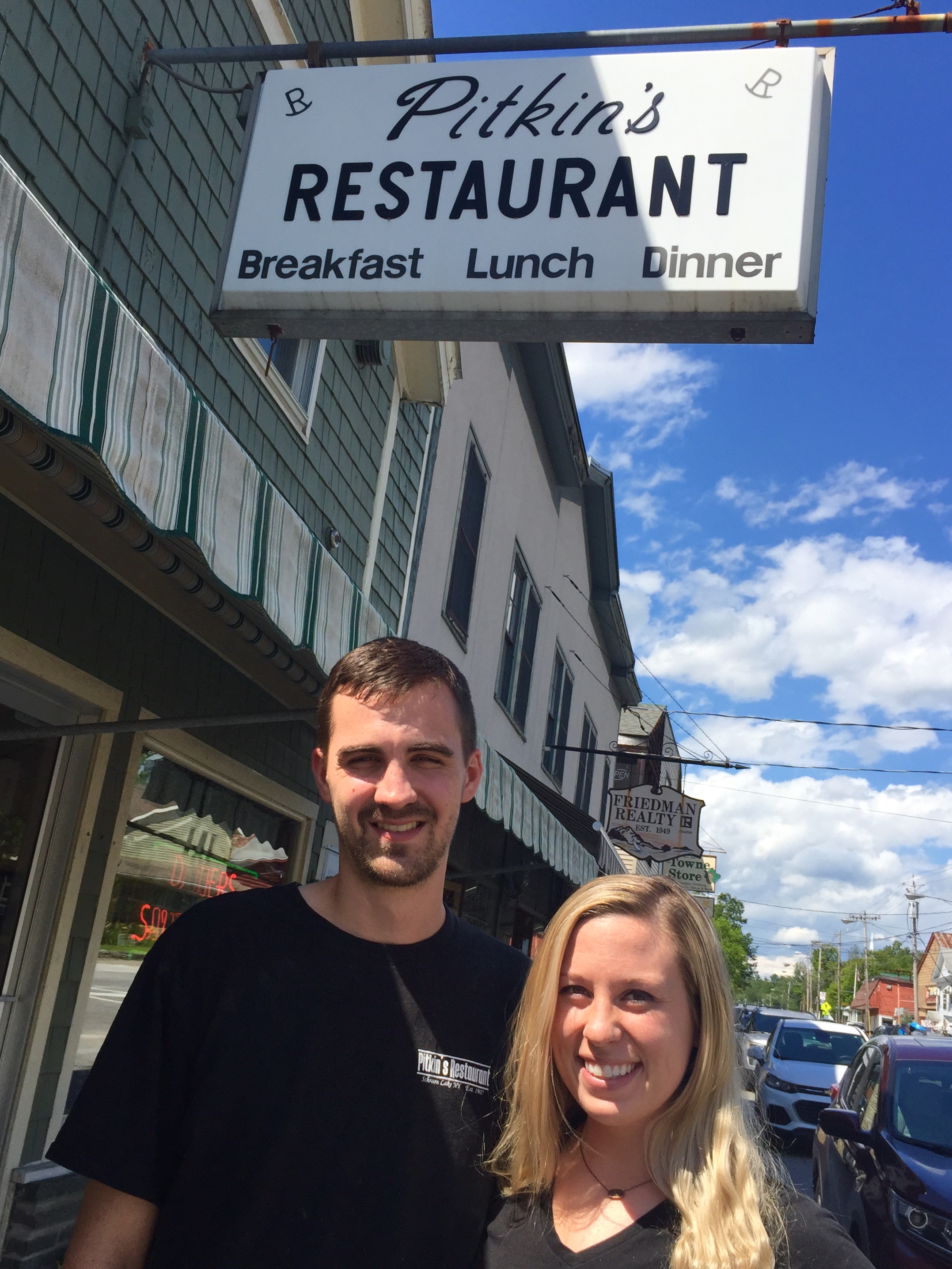
I then mentioned that I wished I had a cheeseburger. That suggestion was all it took. We drove straight down Schroon Lake's classic resort Main Street and stopped in front of Pitkin's Restaurant. A couple was exiting the front door just as we entered, and we saw that we were, again, the only people around in this classic diner-style eatery.

A friendly voice from the back said - "sit wherever you like!" We chose a booth, and were immediately provided with menus, on which I spied the bacon cheeseburger right away.

pitkinsWe ordered our comfort food and waited approximately 3 seconds and our plates were in front of us. I didn't actually time it, but I believe it was about 2 minutes later that we had stuffed all the homemade goodness in, and, satisfied without adding dessert, swiftly got our check.

I knew that the restaurant had been there for a while, so I asked the waitress (the only other person we'd seen all day) if there was any printed information about the place that I could read. She said, no, but they were celebrating 105 years of consecutive business this year, and the current owners have been running Pitkins for about 60 of those years!

We couldn't have planned it better. This deserted weekend hike adventure is an anomaly - but we were psyched to have the entire Pharaoh Lake Wilderness to ourselves for the day! 

Success!

You have successfully entered this contest. Be sure to check your inbox for your customized travel inspiration.

Success! Message Sent.

Thanks for being awesome. We have received your message and look forward to talking with you soon.

Thank you!

Thanks for being awesome. You can now download the guide.